|
WAR OF 1812 FORTS AND BATTLES Wonderful Source: Click Here For a detailed listing of War of 1812 Battles. This site, unfortunately, ignores the Creek War in the South
CLICK HERE For more info Battle of the Sink Hole fought in what is now Missouri LISTING 1812 BATTLEFIELD SITE MARKERS WITH ABOUT CLICK HERE GEORGIA
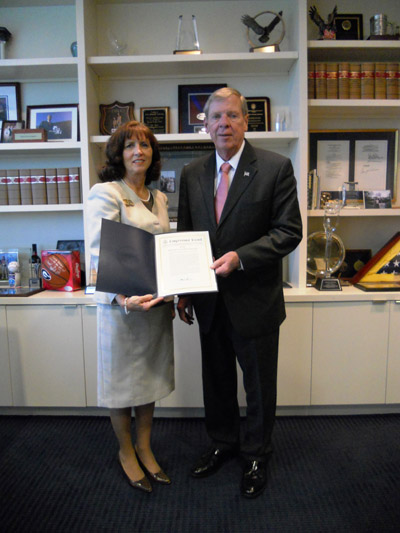
Georgia State Bicentennial Committee Chair, Judy Wall Smith, requested Georgia Senator Johnny Isakson, to issue a Proclamation for the Bicentennial of the War of 1812. He did not issue a Proclamation. FORT HAWKINS Fort Hawkins significance revealed
By MARTY WILLETT Special to The Telegraph
Two hundred years ago on June 18, 1812, our young nation declared war on the world’s greatest military power, Great Britain, in order to preserve our newly found freedom from that same oppressive foe. This past June 18, the Fort Hawk-ins Commission and the Maj. Philip Cook Chapter of the United States Daughters of 1812 dedicated a new historic marker at our early American frontier fort and factory. This marker proclaims that Fort Hawkins was arguably the most significant site in the South during our “Second War of Independence” being both U.S. Army Headquarters for the entire Southeastern theater and Georgia Militia Headquarters. This historic marker dedication was attended by more than 100 visitors, who wished to bear testimony to the unveiling of this amazing history in Middle Georgia. They included many distinguished historians, archaeologists, community leaders and descendants of original fort family members, such as the family of Maj. Philip Cook, the original commander of both the U.S. Army garrison and Georgia Militia stationed at Fort Hawkins during the war. The true military nature of the marker’s dedication was well represented by our own 48th Infantry Brigade Combat Team and a special appearance by a War of 1812 colonel in his full splendid period regalia. Col. Steve Abolt, commander, 7th U.S. Infantry Living History Association. “Cottonbalers” provided powerful words of praise for the spirit of the American people both 200 years ago and today. Lt. Col. Matthew Smith, 48th Brigade deputy commander, reminded all of the continued dedication of our own Middle Georgia Brigade with their distinguished efforts around the world and in our own backyard. Their proud roots can be easily be traced to the citizen soldier and U.S. Army regular troops that helped “preserve us a nation” at Fort Hawkins during the War of 1812. The 48th Brigade Color Guard under the command of Sfc. Stan-ley Walker provided the needed and polished military bearing the dedication deserved. The real military importance of Fort Hawkins was detailed precisely and profoundly by featured speaker Dan Elliott, president of the LAMAR Institute and Fort Hawk-ins lead archaeologist, who has dubbed our fort “The Pentagon of the South.” As the 15-star spangled banner flew over the fort once again, as it did 200 years ago, we were reminded that our own Fort Hawkins was of equal importance as the famed Fort McHenry in Baltimore, Md. During Elliott’s introduction, one of the mighty aircraft from Robins Air Force Base flew over and the crowd was reminded that “Every Day In Middle Georgia is Armed Forces Appreciation Day” and it began at Fort Hawkins 200 years ago with its valuable contributions to the national defense and the local economy. Fort Hawkins not only became Macon’s birthplace, but also played a significant role in saving the nation and developing the southeastern United States during this turning point in American history. Ironically, Macon would help birth Robins AFB out of the tiny town of Wellston. Our military tradition is as awesome as our famous cultural heritage of architecture, education, music, religion, etc. This proud military history stretches back to the fort’s namesake, Col. Benjamin Hawkins, who served on Gen. George Washing-ton’s Revolutionary War staff. It stretches to the modern world with local heroes such as Medal of Honor recipient Sgt. Rodney Davis and Lanier Poet and NASA astronaut Capt. Sonny Carter. As the nation begins its Bicentennial Celebration of the War of 1812, Middle Georgia should be proud of our own contribution to this long and steady military tradition that began at Fort Hawkins in 1806. The Fort Hawkins Commission has plans to preserve and promote its amazing early American history and the public is encouraged to visit the fort’s website: www.forthawkins.com and the historic fort site on Emery Highway, now open every weekend with no admission charge and on all patriotic holidays such as our recent 10th annual Fourth of July celebration. As archaeologist Elliott stated at the War of 1812 Bicentennial celebration marker dedication, “Fort Hawkins is truly an important historical and archaeological gem. It honors the building blocks of freedom and liberty that our ancestors struggled to create and serves as a vivid and noble reminder of the blood shed for human liberty in the War of 1812.” Marty Willett is the Fort Hawkins Commission Press Officer & Project Coordinator.
For more Info on fort Hawkins Click Here ILLINOIS: FORT DEARBORN MASSACRE (Chicago) ClickHERE NEW YORK: Battle of Sandy Creek and the Great Cable Carry Emily Otis Gill Submitted by Charlene Cole, Sandy Creek/Lacona Historian
The following account was found in an old file of the Sandy Creek News for May 7, 1896. It’s an interesting description of the War of 1812 and of life during the 18th century. Mrs. Emily Otis Gill who wrote it was born in Ellisburg April 3, 1814. The battle of Sandy Creek occurred about one half mile from her father’s house when she was less than two months old. She lived to be nearly 98 and retained to the last her remarkably brilliant mind. Her reminiscences follow:
I was born amidst the tumultuous scenes and casualties of ruthless war. My first remembrances were very antagonistic to our Canadian neighbors, as the British soldiers or Red Coats as they were called, had invaded our country or even our neighborhood for a battle was fought only one-half mile from our house.
I was named by one of our American officers after his sweetheart, with the promise of a golden eagle if he lived, but he died. A battle was fought within a half mile of our house. The balls flew by the house in too close proximity to please my mother, so she took her baby and fled to a place of safety, nothwithstanding they were keeping what was then called a tavern, modern hotel. Her old brick oven was full of meats and dainties for the officers as soon as the battle would be over. When she returned next morning the floor was covered with dead bodies and the blood was over the soles of her shoes and every available cotton thing was torn up for bandages for the living, not a small loss when cotton cloth was seventy-five cents a yard. My father was one of the men who helped to carry that large cable eighteen miles upon their shoulders. My longevity perhaps I inherited from my mother. The ages of herself and five sisters amounted to 515 years at the time of their death.
Times have changed wonderfully since then. Our grandmothers and mothers plied the spindle to make cloth whereby to clothe the family. Now it is made ready for our use. (If we can get the wherewithal to but it) If an animal died there was no loss. The hide was tanned in the good old fashioned way, not split and burned up by the new process, and it went to shoe the family when cold weather set in, also made in our own homes by traveling cobblers.
After my marriage I settled down as all farmers’ wives did at that time to a life of drudgery. I sometimes had some higher aspiration than making butter and cheese. As I sat musing one day these words came to me, Cease, cease these longings, peace be still, for fame ne’er followed in the track of Gill, but I can look back through my ancestral genealogy and trace such names as James Otis, signer of the Declaration of Independence; also Longfellow and others of note. So I often wonder why their shadow could not fall on me.
In 1837 I went from Buffalo to Syracuse and it took five days, now it takes five hours. Washington passed away only fourteen years before my birth. Lafayette visited this country in 1824, the year sister was born. Years later I was in Canada and a lady of my acquaintance bought some plates in Kingston that had the landing of Lafayette in New York on them and her husband was so mad he would not eat from them.
The first steamboat on Lake Ontario was long since my remembrance. From these low beginnings I have witnessed marvelous growths. Oceans are traversed by steam. The iron horse speeds its way from Maine to California in a marvelous short time. Allow me my friends to mention the things that science has wrought in the medical world. Years ago in performing a surgical operation no anesthetics were known. Patients had to succumb to the keen strokes of the knife until agony was too great to be endured and would sink beneath the fearful shock. I imagine that the next fifty years will not witness as many improvements as the last unless it is in electricity. I have lived under the rule of eighteen presidents and the most vigorous campaign I ever witnessed was when William Henry Harrison was elected in 1840. I had eight brothers and sisters, five of whom are laid at rest; forty cousins, mostly gone, only one older than I am. My life has not been one of brightness or all gladness but tempered just enough with sadness that others woes I’ll not forget. If sorrow has overtaken me I have ever seen in it the hand of a loving Father and when the dark clouds passed away I could see a silver lining. The following material is courtesy of Charlene Cole, Sandy Creek/Lacona Historian Note: This account is taken from the History of Oswego County, New York 1877, followed by a British account of the Battle of Big Sandy Creek When the War of 1812 broke out, the people of Sandy Creek, being on the immediate frontier, were kept in a continual tremor. From the lake-shore they could see the enemy’s vessels sweeping over the adjoining waters, now driving the American craft into their harbors, now in turn pursued by Chauncey’s increased fleet. Mrs. Robbins recounts the exciting scene which occurred one summer Sabbath, when the people had gathered at Mr. Hinman’s to hear the gospel preached by some wayfaring minister. Suddenly a messenger came galloping up, crying out, “The British have landed and designating the point assailed. Immediately all was confusion, men hurrying away to get their arms, children crying, and women shuddering with terror at the thought of the Indians, whose presence was always taken for granted when British troops appeared at that time. Again and again the militia was called out to repel an attack on Sackets Harbor. There was probably not a man in town of sufficient age that did not perform considerable military service during the two and a half years that the war lasted. Smith Dunlap was captain of the militia company from that section; Nicholas Gurley was lieutenant, Samuel Dunlap ensign and Reuben Hadley orderly sergeant. Late in April 1814, Colonel Mitchell, with a small body of infantry, came marching along the Old Salt Road on their way to defend Oswego from a threatened attack. A few days later came the news that the defense had been unsuccessful and Oswego had been captured. For a while rumors flew thick and fast. On the 29th of May the dwellers in the western part of the town saw the curious spectacle of a body of Oneida Indians, in their war paint and feathers, and accompanied by a few soldiers, marching along the shore of Little Sandy Pond, while those who looked out upon the lake described nearly twenty large and heavy-laden boats, carrying the American flag and impelled northward by hundreds of stalwart oarsmen. It was Woolsey’s flotilla, bearing cannon and stores for Commodore Chauncey’s new ship, “Superior,” as related in the general history. The next morning messengers came hurrying through the country; informing everyone that Woolsey had run up big Sandy Creek, in Ellisburg, that the British were about to follow, and urging all to come to the rescue. The militia were speedily mustered and hastened to the scene of the expected conflict, but none of them arrived the thunder of cannon which startled the whole town from the shore of the lake to the slopes of the Boylston hills, and in the northern part the rattle of small arms could be distinctly heard. The militia, on their arrival, found that every man of the assailing force had been killed or captured. There was no fighting to be done, but some of the Sandy creek men took part in the celebrated feat of carrying to Sackets Harbor on their shoulders the great cable of the “Superior” weighing nearly five tons. When the vessel had been equipped and sent to Sea the British Commander was willing to take a retired position, and the Americans along the lake felt less anxiety about a hostile incursion. British account of the affair at “Sandy Bay”
It is with extreme regret we have to acquaint the public with the unfortunate result of a gallant enterprise by the boats of our squadron on Lake Ontario, under the command of Capts. Popham and Spilsbury of the Royal Navy, against a flotilla of the enemy’s craft laden with Naval stores, which had got into Sandy Creek on its way from Oswego to Sackets Harbor. On the morning of the 20th ult. a large boat with two 24 pounders and a 19and a half inch cable for the enemy’s new ship was captured by our squadron, having sailed from Oswego the evening before with fifteen others. Captains Popham and Spilsbury, with two gun boats and some smaller craft, having on board about 200 seamen and marines, entered the creek on the morning of the 21st, where the enemy’s flotilla were shortly after discovered. Parties were landed on each side of the creek and proceeded together with the boats, without opposition, to within about a quarter of a mile from the enemy, when suddenly a considerable force, consisting of 150 riflemen, nearly 200 Indians and a numerous body of militia and cavalry attacked and soon overpowered our small party whose gallant resistance to such numbers proving unavailing, a surrender became indispensible to save our brave men from certain death. Our loss on the occasion was 19 killed and 50 wounded. Mr. Hoan, master’s mate of the Montreal, is among the killed and Lts. Cox and Kagh, of the marines are severely wounded. The boats also fell into the hands of the enemy.
The Battle of Big Sandy Creek By Charlene Cole, Historian, Sandy Creek/Lacona The British controlled the waters of eastern Lake Ontario toward the end of the War of 1812, thus preventing our ships from sailing out of the harbors. Toward the end of May 1814, the British attempted a landing along the banks of Big Sandy Creek. Apparently forearmed with knowledge of the impending attack, our soldiers and some friendly Oneida Indians concealed barges loaded with supplies for ships at Sackets Harbor, in the willows along the stream. When the cannon in the British lead boat failed to fire, the British were overpowered by our ambush and soon waved a white flag of surrender. At Sackets Harbor the Americans were building a new warship called The Superior that could carry 500 men. This area was thriving due to wartime activities, but the British controlled the waters. In an attempt to transport supplies from Oswego to Sackets Harbor via Lake Ontario, the Americans were forced inland by the threat of British attack. This meant that the Superior’s anchor chain, a huge cable eight inches in diameter, six hundred feet long and weighing over four tons, had to be carried in some other way. This presented a major problem since it was too heavy to be carried by carts alone. It was decided that 200 of the strongest men would carry the rope on their shoulders. They lined up according to height and marched behind the oxen-drawn cart. Even though they carried in relays, many dropped along the way from exhaustion. And although the rope was made from hemp, many men bore scars on their shoulders for the rest of their lives. This procession must have looked like a slow-moving centipede. In the three days it took to travel the twenty miles to Sackets Harbor, the men’s luck held out when they were able to avoid a British contingent, led by Sir James Yeo, which had come ashore. On their arrival at Sackets Harbor the brave volunteers were greeted by waving flags, fife and drum corps, townspeople and militiamen grateful for the supplies to carry on their battle. The Cable Trail is marked by special monuments erected in 1932 by the New York State Chapter of the Daughters of 1812 and the State of New York. Each of the three large granite monuments with a special bronze plaque was placed near the site where the men camped each night. A Battle of Big Sandy Creek monument was erected in 1926. The trail runs north from the battle site at the South Landing, past the site of a house used as a hospital for the wounded British, and goes through Ellisburg, Bellville, Roberts Corners, Butterville and Smithville, crossing Route 3 at Purpura Corners to enter the village limits of Sackets Harbor. The Cable Trail markers are located between Ellisburg and Bellville on Route 289, between Roberts Corners and Butterville on County Route 75 and just west of Route 3, also on Route 75.
3 |
|||||||||||||||||||||||||||||||||||||||||||||||||||||||||||||